






Unraphael is a digital workflow tool that uses computer vision to unravel the artistic practice of Raphael (Raffaello Sanzio, 1483-1520), while providing new digital approaches for the study of artistic practice in art history. Dozens of faithful reproductions survive of Raphael's paintings, attesting to the lucrative practice of serial production of paintings within the artist's workshop and to the lasting demand for the master's designs.
Unraphael provides a flexible and easy-to-use GUI to inspect and assess the structural similarity of figure-outlines in images. Photographs of paintings are used as input for the application.
While Unraphael was made for art historians and researchers in the humanities to study the artistic practices of and the process of making copies of paintings, the functionality of Unraphael extends well beyond the study of Raphael's paintings and can be used for a wide range of applications in the digital humanities and beyond.
Features:
- Image preprocessing
- Background removal
- Image alignment
- Image clustering based on structural similarity
- Ratio analysis painting - photo dimensions
To install:
pip install unraphaelYou can also try unraphael directly from your browser.
| Link | Description | Image |
|---|---|---|
| Image similarity | Group your images using cluster analysis | 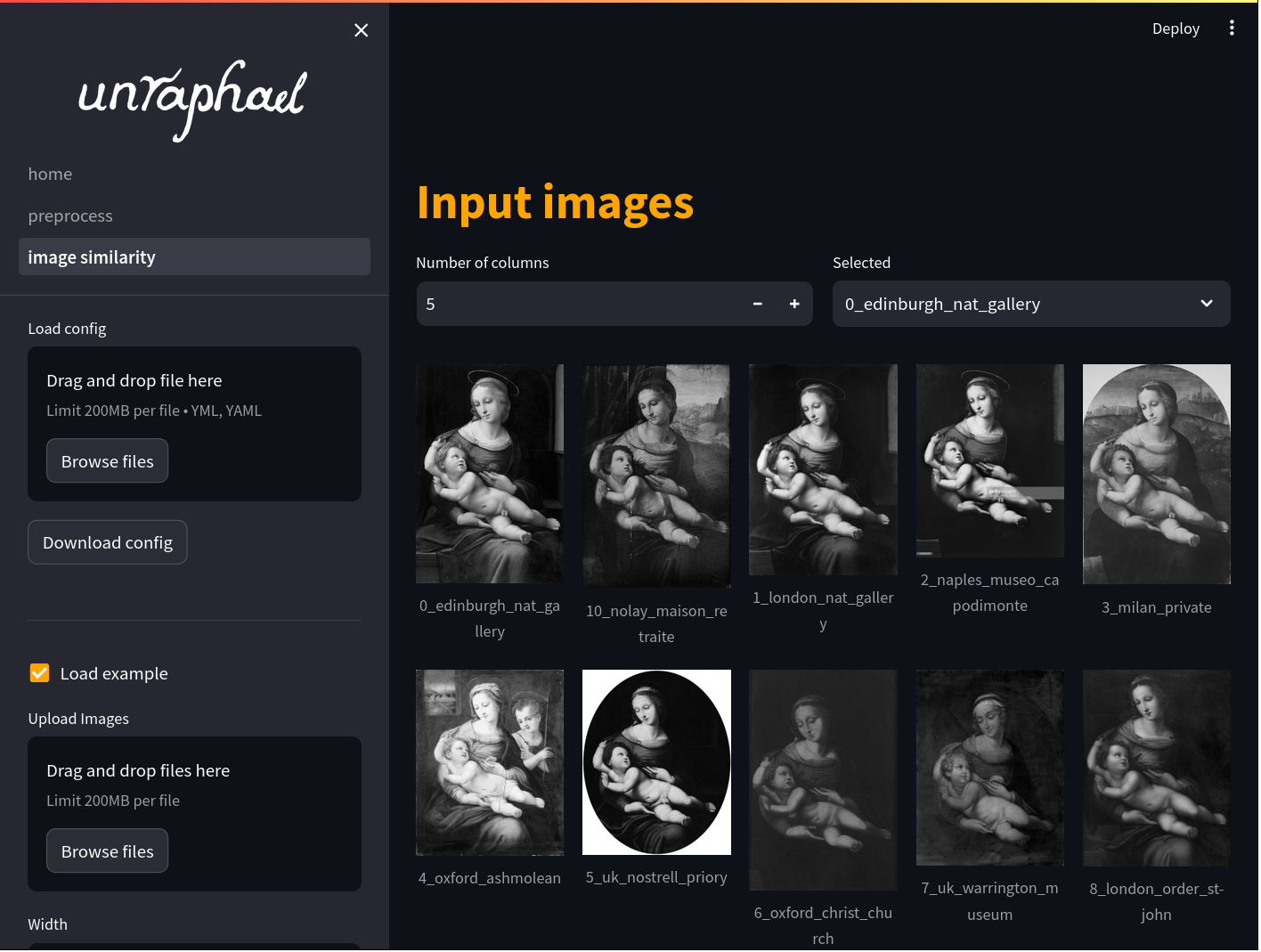 |
| Image preprocessing | Preprocess your images, e.g. background removal, color adjustments, applying image filters, segmentation | 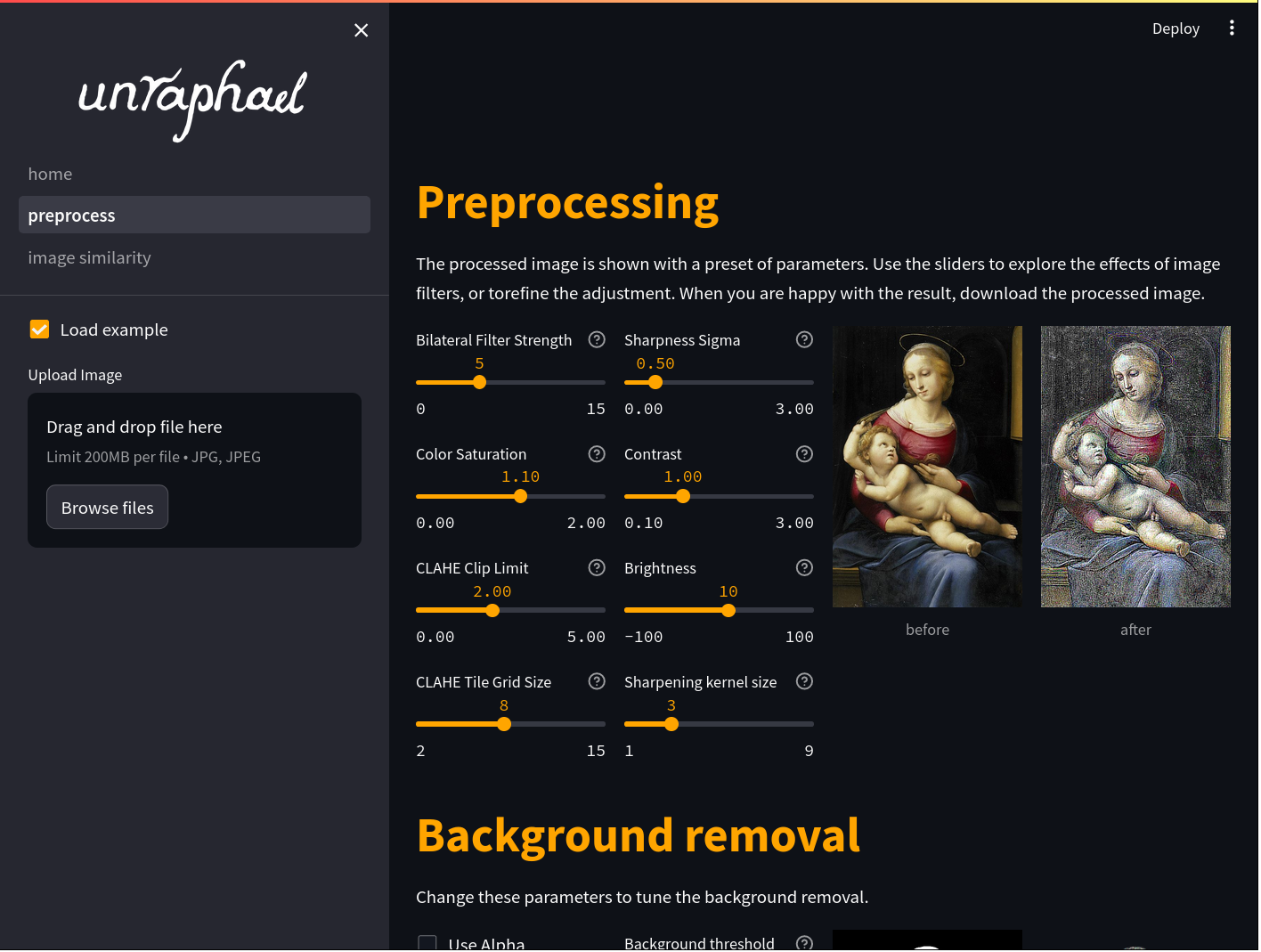 |
| Object detection | Quickly and accurately identify and segment figures or objects within an image to analyse the isolated components | 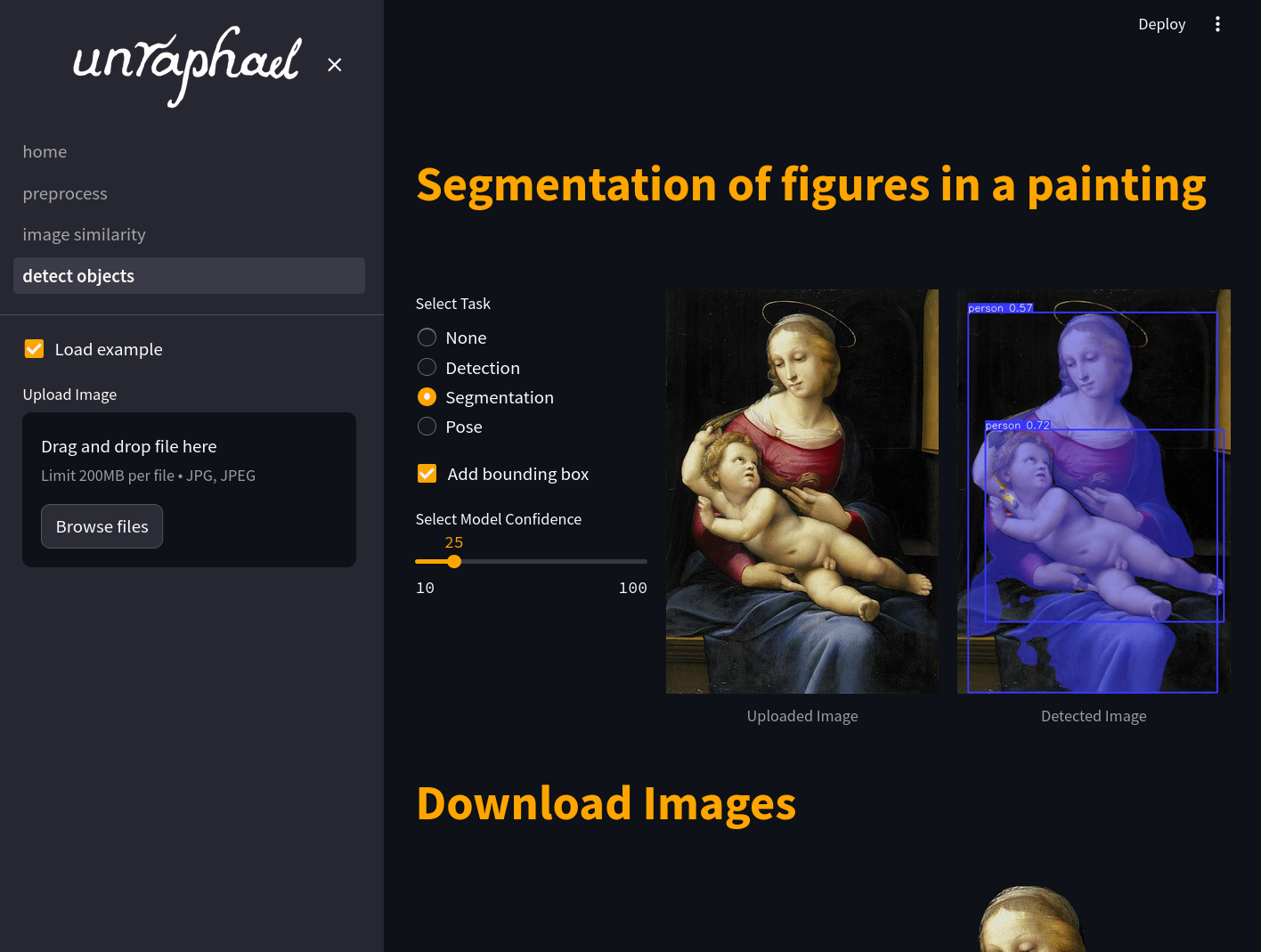 |
| Image comparison | Compare your images based on their structural components | 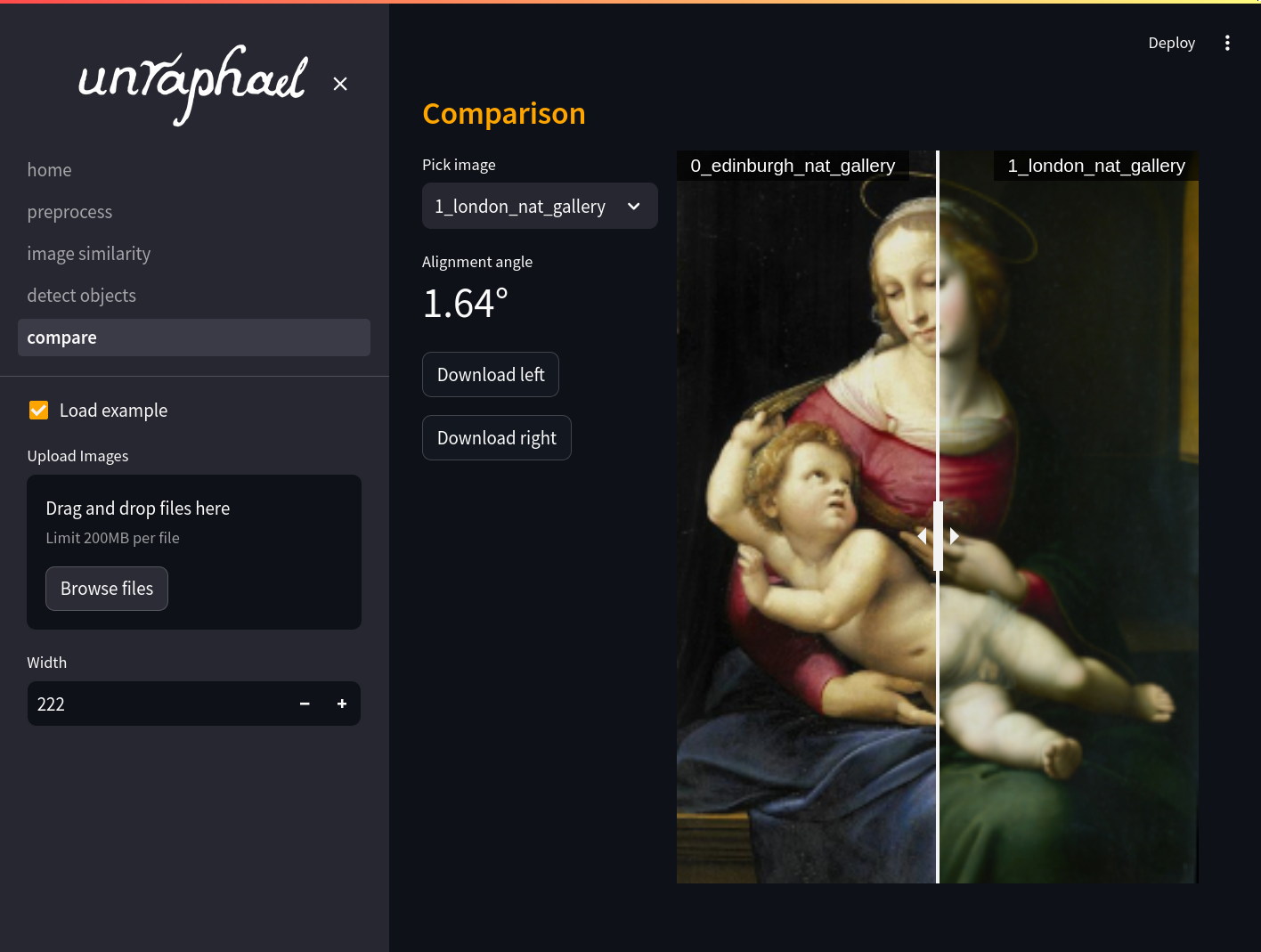 |
To install and use the dashboard locally:
pip install unraphael[dash]
unraphael-dashCheck out our Contributing Guidelines to get started with development.
Suggestions, improvements, and edits are most welcome.
To run on dashboard with:
sudo apt-get update && apt-get install libgl1 libglib2.0-0 -y
# As www-data user
python3 -m venv venv
pip install 'unraphael[dash]@git+https://github.com/DecodingRaphael/[email protected]'
Systemd service
To run unraphael as a service, you can create a systemd service file. This will allow you to start, stop, and restart unraphael using systemd.
- Create a service file for unraphael, for example
/etc/systemd/system/unraphael.service:
[Unit]
Description=Unraphael dashboard
After=network.target

[Service]
Environment="XDG_CACHE_HOME=/cache/dir" HOME="/writable/dir"
User=youruser
WorkingDirectory=/home/youruser
ExecStart=/home/youruser/.local/bin/unraphael-dash
Restart=on-failure
User=youruser
WorkingDirectory=/home/youruser
ExecStart=/home/youruser/.local/bin/unraphael-dash
Restart=on-failure

[Install]
WantedBy=multi-user.target
Replace /cache/dir and /writable/dir with the actual paths to your cache and writable directories.
Replace youruser with your actual username. Also, make sure that the path to unraphael-dash is correct. You can find the correct path using which unraphael-dash.
- Enable the service:
sudo systemctl enable unraphael.service- Start the service:
sudo systemctl start unraphael.service- Check the status of the service:
sudo systemctl status unraphael.service- To stop the service:
sudo systemctl stop unraphael.service